

What Is SASE? Definition & core components
Опубликовано 6 Января 2025 в 13:57
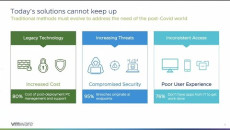

Even for small to medium-sized organizations, SASE can absolutely simplify network and security management. It moves businesses toward a more unified, easily managed network security model. The confusion is often compounded by aggressive marketing that may stretch or oversimplify what secure access service edge actually encompasses.

SASE offers a compelling value proposition, boasting enhanced security, improved user experiences, substantial cost reductions, unparalleled scalability, and streamlined management capabilities. SASE simplifies operations and improves security by merging networking and security into a single service. Centralized policy management allows SASE to apply security and access policies consistently across all users and devices, reducing the risk of misconfigurations and enhancing overall security. This is achieved by leveraging a cloud-native architecture for global service delivery, rapid deployment, and scalability. SASE functions through a combination of elements that ensure seamless and secure access to resources, regardless of user location. If your organization is cloud-first or mostly remote, SD-WAN alone will introduce security gaps.
Secure access service edge (SASE) is a cloud-native architecture that unifies SD-WAN with security functions like SWG, CASB, FWaaS, and ZTNA into one service. Gartner introduced the term in 2019 to name the convergence of network and security services into a primarily cloud-delivered model. It allows organizations to apply one consistent policy across how users reach applications, regardless of where the user or the application is located.

Resilient infrastructure

A firewall is a single security tool that’s traditionally deployed as a physical appliance at the network perimeter. VPNs place users on the network and introduce lateral movement risk, while ZTNA never places http://www.wtfmacos.ru/en/1password-password-manager-and-secure-wallet-4-3.html users on the network. SASE provides zero trust network access (ZTNA) capabilities, which grant least-privileged access to specific applications. SASE brings together multiple security tools into one solution, so enterprises can consolidate their legacy security tooling with SASE.
- Secure access service edge responds to the decentralization brought on by increased cloud adoption, mobile access, and remote working.
- Criticism of SASE has come from several sources, including IDC and IHS Markit, as cited in a November 9, 2019 sdxcentral post written by Tobias Mann.
- SASE reduces complexity with its Cloud computing model and a single vendor for all WAN and security functions, vs. multiple security appliances from multiple vendors at each location.
- Security functions include application control, deep and encrypted packet inspection, intrusion prevention, Web site filtering, anti-malware, identity management, threat intelligence and even WAN quality of service and bandwidth management.
- The migration allows for the use of broadband internet connections, which are far less expensive and more flexible than MPLS links.
Using DevOps evolution as a model, combine these teams' strengths for a unified goal. https://chinanews777.com/pentest-as-the-most-modern-and-effective-means-of-protecting-a-system-from-hacker-attacks.html To effectively implement SASE, networking and security teams absolutely have to collaborate closely. Also, assess the responsiveness of the provider’s support team by requesting references or conducting a trial of their service.
- Protect your most critical data—discover, monitor and secure sensitive information across environments while automating compliance and reducing risk.
- WAN security solutions aren’t designed for this kind of workload mobility, but SASE, which abstracts security capabilities from the underlying infrastructure, secures traffic wherever it moves.
- This evaluation will help determine which components can be integrated, replaced, or upgraded to support the SASE deployment.
- FWaaS delivers a cloud-native, next-generation firewall, providing advanced Layer 7 inspection, access control, threat detection and prevention, and other security services.
- But these appliances incur high maintenance costs, and they’re difficult to keep up-to-date.
- 5G and SASE combine to provide a secure, high-performance framework that facilitates swift, safe communication across extended networks.
- SASE doesn’t require the capital investment or staffing needed to maintain physical appliances.
- Within a SASE architecture, zero trust network access (ZTNA) is the component that grants application-specific access based on continuously evaluated identity and context.
- Not to mention, it enhances security by providing consistent, real-time threat prevention and data protection across all environments.
- A zero trust approach to network access is one that never trusts and continuously validates all users and entities, whether they’re outside or already inside the network.
- Automate data protection, threat detection and compliance to secure your enterprise across cloud and on‑premises environments.
It provides centralized management and control of the network to enable visibility and agility. SSE technologies include cloud access security broker (CASB), zero trust network access (ZTNA), secure web gateway (SWG), and firewall as a service (FWaaS). Gartner recognized Zscaler as a Leader in the 2026 Magic Quadrant for SASE Platforms for its AI-enhanced approach to unifying network and security into a single, scalable cloud service. Zscaler provides an AI-powered cloud framework that modernizes legacy architectures with zero trust principles. Teams have to sort through different dashboards to compile logs, and troubleshooting individual connectivity issues frequently involves two vendors instead of one.

Global connectivity
Enterprises often don’t have full visibility into which apps have embedded AI, or how that embedded AI is secured and patched. Embedded AI, or AI capabilities that are embedded in SaaS apps like Salesforce and ServiceNow, is another risk. SASE surfaces shadow AI, applies least-privileged access to sensitive GenAI apps, and enforces inline data loss prevention (DLP) policies to block risky AI transactions. As enterprises increase their AI usage, they require more bandwidth and the ability to manage greater volumes of east-west traffic, which tools like agentic AI generate in large quantities. AI and ML activity increased 83% year over year from 2024 to 2025 (ThreatLabz 2026 AI Security Report). After the deployment, the company prevented 4 million https://workingholiday365.com/benefits-of-using-penetration-testing-to-secure-your-business.html policy violations and blocked 14,000 threats monthly.
Connecting and securing branch and retail locations
As more organizations pursue digital transformation—and as they increasingly adopt cloud environments, edge computing and work-from-home or hybrid work models—more and more users and IT resources will reside outside the traditional network perimeter. In reality, secure access service edge marks a fundamental change in integrating cloud networking and security. Integrate secure access service edge progressively, aligned with IT initiatives and business goals. A SASE provider should offer scalable solutions that can grow with your business without requiring significant additional investments in hardware or changes to the existing infrastructure.